
Why does internal communication keep missing the frontline?
Most internal communication misses the frontline because it travels on channels the frontline cannot reach. Email and the intranet assume a desk and a corporate login. About 80% of the global workforce, roughly 2.7 billion people, has neither (Emergence Capital, 2026). The message is not weak. The delivery is.
This is the quiet reason so many engagement programs stall. Leaders write a thoughtful update, send it by email, and assume it landed. For the people on a shop floor, in a warehouse, in a store, or on a ward, it never arrived. They have no corporate inbox to receive it in.
The numbers are stark. 83% of frontline employees have no company email address (HubEngage, 2026). 45% have no access to a company intranet. And only 29% of non-desk employees say they are satisfied with internal communication quality, compared with 47% of desk-based colleagues (2026 frontline communications reporting). The gap in satisfaction is really a gap in access.
In this post we make a simple argument. The frontline communication problem is usually treated as a channel problem, solved by buying another app. It is better understood as a format problem. The one device every frontline worker already carries is a phone, and the format that holds attention on a phone is short video. It connects directly to a wider internal communications strategy built for a distributed workforce.
The frontline gap and the engagement gap are one and the same
Two 2026 datasets are usually discussed separately. Read together, they tell one story.
Gallup's State of the Global Workplace 2026 reported global employee engagement at 20%, the second consecutive annual decline, with US engagement at 31%, an 11-year low (Gallup, 2026). Low engagement costs the world economy roughly $438 billion a year (Gallup, 2026). The headlines treat this as a motivation crisis.
At the same time, frontline reporting put hard figures on reach. Poor information access and frontline friction cost US organizations more than $80 billion a year in lost productivity, an estimated $12,506 per deskless employee (2026 frontline reporting). Organizations using three or more channels see 68% message recall after 24 hours, versus 31% for a single channel (2026 frontline reporting).
Put the two together and a different conclusion appears. A large share of disengagement is not an attitude problem. It is a delivery problem. You cannot engage people you never reach, and the default channels structurally cannot reach most of the workforce. The lever that moves both numbers is the same: deliver the message where the frontline actually is.
Why "buy another platform" is only half an answer
The common fix is to add a channel. Frontline apps and SMS both help, and the data backs them up. Text messages reach a 98% read rate within 90 seconds, against about 20% for email (2026 frontline reporting). Adding coordinated channels works too: four or more channels achieve 94% reach (2026 frontline reporting).
But reach is necessary, not sufficient. A new app still mostly delivers a wall of text to a busy shift worker with two minutes between tasks. The channel changed. The format did not. That is where attention leaks away.
Video wins the battle email loses
Video matches both the device and the moment. A short clip plays on the personal phone the frontline already carries, and it asks for attention in a way text on a small screen does not.
Be precise about the claim. A controlled eye-tracking study found video captures more attention than text, measured by gaze and fixation duration, though it found no significant difference in recall between the two formats. So the honest case for video is not that people remember it better. It is that people actually watch it, and watching is the step email loses.
The engagement signal is consistent. Videos under 60 seconds generate about 2.5x more engagement per impression than other content types (2026 video statistics). For a younger, social-native workforce raised on TikTok and Reels, a 45-second clip is the native format, not a novelty. As more frontline organizations adopt this, the question shifts from whether to use video to how to produce enough of it.
Internal comms only works if people actually notice it, understand it, and act on it. That is getting harder every day, and I need a better way to break through.
That is the daily reality for most internal communicators. Video breaks through the noticing problem. Production is what has stood in the way of doing it at scale.
What used to make video impossible at frontline scale
Video has always been the obvious format. Producing enough of it was the obstacle. Three things blocked frontline-scale video, and all three have shifted in 2026.
Cost. Studio production was too expensive to justify for routine updates. AI-assisted editing, scripting, and voiceover have cut the median cost from about $4,200 to $2,500 per finished minute (2026 video statistics). Routine internal video is now economically sane.
Speed. A frontline message is often urgent, a safety change, a shift update, a policy correction. Two weeks of agency turnaround does not fit that clock. In-house AI video collapses time-to-publish from weeks to the same day, the same logic behind turning a town hall into short clips.
Brand risk. Scaling video to thousands of frontline touchpoints used to mean losing control of how the company looked and sounded. This is the real blocker for enterprise teams, and it is why 72% of teams still require human review of AI video before publishing (2026 video statistics). Done right, it is a question of AI video governance, not slower production. The answer is not less video. It is video that cannot leave the brand box in the first place.
How cofenster closes the frontline video gap
cofenster is the AI video platform for enterprise communications. Our AI Video Agents let Comms, HR, and Marketing teams produce on-brand video at scale, which is exactly what frontline reach requires. Three agents map to the frontline use cases.
Theo turns text into video. A policy update or a "need to know" summary becomes a 60-second explainer that plays on a phone, with no filming and no studio. This is how a corporate communications team reaches a warehouse floor the same day the policy changes.
Ella guides employees and leaders to record themselves on any phone or laptop, with prompts and quality checks that produce a polished result. Leadership messages and frontline employee stories get made from where people already are, not from a studio they will never visit.
Milo turns a town hall or all-hands recording into short clips a frontline worker can watch on a break, instead of a 60-minute video nobody opens.
Brand Templates is what makes this enterprise-safe. Your brand guidelines are built into the product during onboarding, so every output from Theo, Ella, and Milo is automatically on-brand. Scaling video to thousands of frontline workers does not mean policing brand compliance clip by clip. That is the difference between a generic AI video generator and video that stays inside your brand by design.
The pull toward the frontline is not theoretical for DACH enterprises. At Continental, roughly half of the German workforce counts as deskless. Continental, Rewe, and Vorwerk are exactly the frontline-heavy organizations where reach is the daily problem. Customers save an average of €50K per year in agency costs after deploying our AI Video Agents, and cofenster holds a 92% CSAT.
Key takeaways
The frontline gap is a delivery gap, not an attitude gap. 80% of the workforce is deskless and 83% have no corporate email, so the channel most comms defaults to never arrives (Emergence Capital and HubEngage, 2026).
Reach and engagement are one problem. Global engagement is at 20% and disengagement costs roughly $438 billion a year (Gallup, 2026); you cannot engage people you do not reach.
Video wins on attention and reach, not on memory. A short clip on a personal phone is watched where email is ignored, and sub-60-second video earns about 2.5x more engagement per impression (2026 video statistics).
Brand control is the real enterprise blocker. Scaling frontline video safely means brand compliance by design, not manual review of every clip.
Same-day, in-house production is now realistic. AI-assisted production cut median cost to about $2,500 per finished minute, making routine frontline video economically and operationally sane.
See it on your own frontline use case
If reaching the frontline is your daily problem, the fastest way to judge the fit is to watch a policy update or a leadership message become a phone-ready clip. Book a live demo at cofenster.com/live-demo and bring a real message you need to get to the floor this week.
Frequently asked questions
Which video format works best for frontline employees?
Short and vertical. Clips under 60 seconds, shot or rendered for a phone screen, earn about 2.5x more engagement per impression than other formats (2026 video statistics). Lead with the single thing the person needs to know, keep it under a minute, and make it watchable without sound by adding captions. The format mirrors what frontline and younger employees already watch on their own phones.
How does cofenster keep frontline video on-brand at scale?
Brand Templates builds your guidelines, logo, colors, fonts, and intro and outro patterns, into the product during onboarding. From that point every output from Theo, Ella, and Milo is automatically brand-compliant, so producing thousands of frontline clips does not mean checking each one by hand. cofenster is also ISO 27001:2022 certified and GDPR compliant, which matters for IT and works-council sign-off.
Can we reach frontline workers without corporate email or logins?
Yes. Because 83% of frontline workers have no corporate email (HubEngage, 2026), the practical route is the personal phone: a short video shared through a frontline app, a messaging channel, or a QR code on a noticeboard that opens a hosted clip. No inbox and no intranet login required. The video does the work the email never could because it actually arrives.
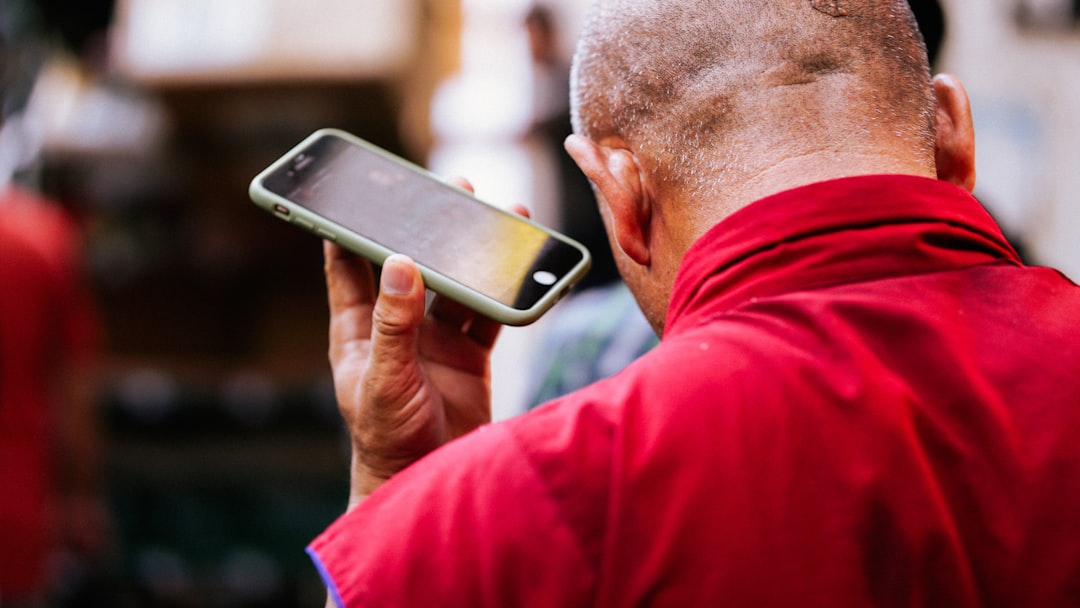
Photo by Amit Rana on Unsplash