
How do you scale employee testimonial videos?
You scale employee testimonial videos by letting employees record themselves with guided prompts, collecting written consent before anyone films, and applying your brand automatically to every clip. That turns testimonials from a yearly agency shoot into a steady stream of short, real stories from every site and team, published in days instead of months.
Most guides on this topic stop at a list of interview questions. This one covers what enterprise teams in Europe actually get stuck on: trust, consent, works councils, frontline staff and measuring whether the videos work.
Why do employee testimonials beat corporate messaging?
Employees trust people close to them more than they trust the top of the organisation. 78% of employees trust their employer and 66% trust their CEO (Edelman Trust Barometer, 2026). The gap is sharper lower down: only 19% of non-executive staff trust their CEO to tell the truth about the organisation, against 52% of executives (Edelman Trust at Work, 2024).
Candidates behave the same way. 83% of job seekers are likely to research company reviews and ratings before applying, and 53% look for more company information after reading a job post (Glassdoor, 2025). A colleague explaining what the job is really like answers that search better than any careers page slogan.
Purpose matters too. 89% of Gen Z and 92% of millennials say a sense of purpose is important to their job satisfaction (Deloitte Gen Z and Millennial Survey, 2025). Real employees talking about why their work matters show purpose. Polished brand films only claim it.
What stops enterprises from producing testimonials at scale?
The bottleneck is almost never the camera. It is coordination: finding willing employees, briefing them, booking a crew, waiting for edits and getting approvals. By the time the video is live, the person may have changed roles.
The pressure to fix this is real in Europe. Germany still has 1.26 million open positions, 231,900 of them at companies with 250 or more employees (IAB, 2026). Filling an IT role takes 7.7 months on average (Bitkom, 2025). One testimonial per year per department will not move those numbers.
Engagement adds a second reason. Only 20% of employees worldwide are engaged at work (Gallup State of the Global Workplace, 2026). Employee stories are one of the few formats that both attract candidates and remind current staff why they stay.
How do you get consent right under GDPR?
Get written consent before recording, explain exactly where the video will appear and make it easy to withdraw. In Germany, publishing an employee's image needs a legal basis under the GDPR and consent under the KUG, and employee consent should be in writing or electronic form (Haufe, 2025). The stakes are concrete: a German labour court awarded €10,000 in damages after an employer kept using a former employee's photos (Haufe, 2025).
A simple consent routine covers most cases:
- Ask for participation, never assign it, and make clear there is no disadvantage in saying no.
- Name the channels up front: careers page, LinkedIn, intranet or all three.
- Record consent with the video so anyone can find it later.
- Agree what happens when someone leaves, and remove the video if they withdraw consent.
- Involve your works council early if your video workflow touches employee data or tools they co-determine.
Handled this way, consent stops being a blocker and becomes part of the brief. It also makes employees more willing to take part, because they know the rules.
What makes a testimonial feel authentic?
Authentic testimonials come from light guidance, not scripts. Judith Freisburger of KOFA, the German competence centre for skilled labour, puts it bluntly: "Don't give your employees specific instructions. That makes them lose credibility" (KOFA, translated). Give people a topic and three open questions, then let them answer in their own words.
Good prompts are specific. "What surprised you in your first month?" works better than "Why do you like working here?" Keep each video under 90 seconds, film in the real workplace and keep the natural pauses. Viewers can tell when an answer was memorised.
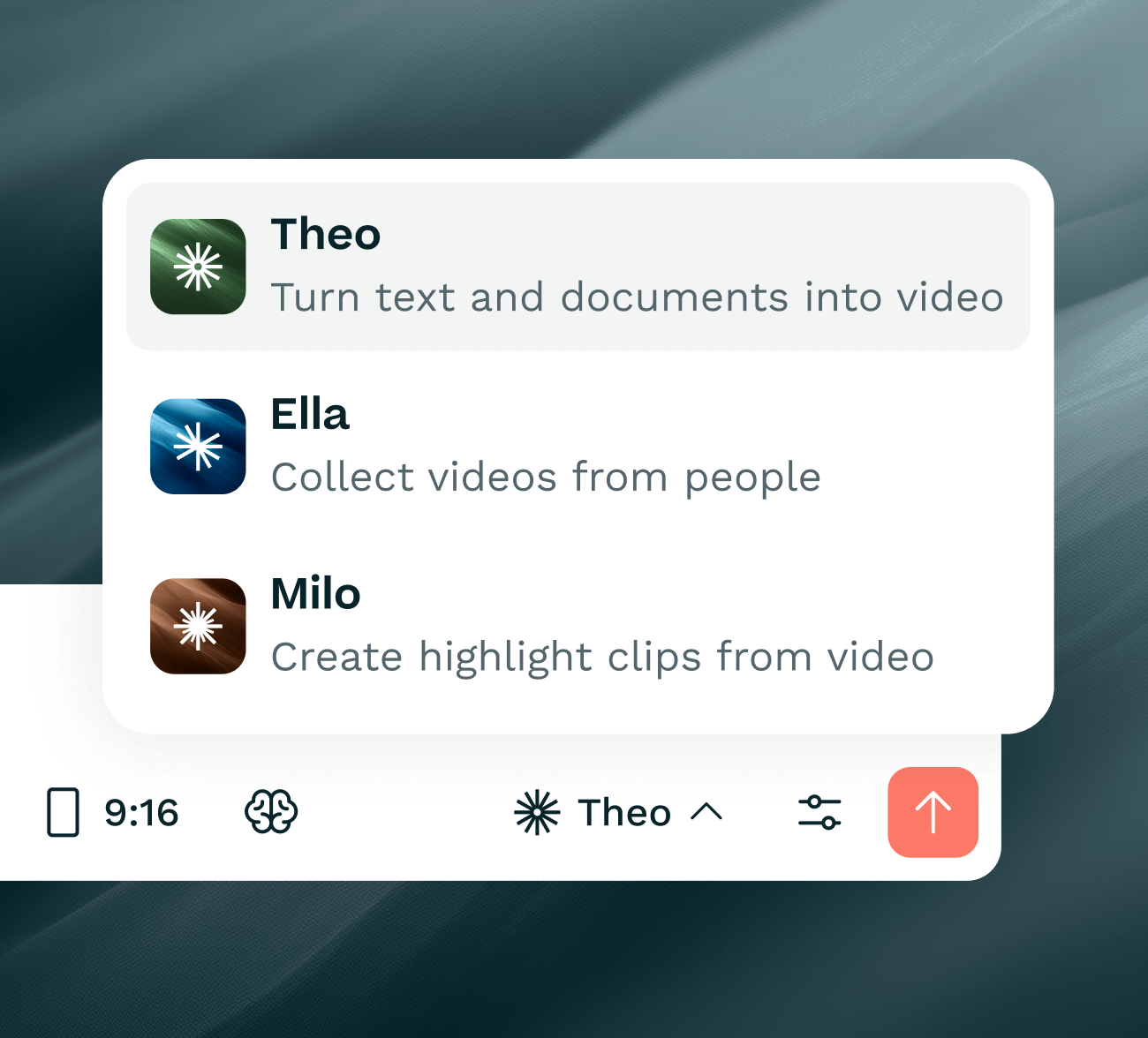
This is where guided recording helps. Ella, cofenster's AI Video Agent for employee recording, creates the storyboard, requests videos from colleagues by email or link, and guides each person through recording with tips and direct feedback. Brand Templates then add your logo, fonts, colours and intro, so every clip is on-brand without an editor touching it.
How do you include frontline and multilingual teams?
Go where frontline staff already are: their phones. Around 80% of the global workforce works away from a desk (Microsoft Work Trend Index, 2022), and their stories are often the most convincing for candidates in logistics, retail, production and care. A phone recording link with clear prompts removes the need to pull anyone off shift for a film crew.
Let people speak in the language they are most confident in, then add subtitles or translation. We cover this in more detail in our guide to multilingual internal communications. For internal use, pair testimonials with the channels your frontline teams actually open, as described in our article on reaching frontline employees with video.
How do you measure whether testimonial videos work?
Measure actions, not views. For employer branding, track applications started from pages with employee videos, time to fill for the roles you featured and candidate feedback in interviews. Glassdoor data shows job seekers are seven times more likely to apply after seeing a company's brand ten or more times (Glassdoor, 2025), so frequency matters as much as quality.
Search behaviour is changing too. 81% of candidates in Germany start employer research on Google or Bing, 19% already use AI chatbots, and 88% still want career information on company websites (Stepstone, 2025). Publish testimonials on your own careers pages with a short text summary, so both search engines and AI assistants can find and quote them.
Key takeaways
Trust sits close to employees. Colleagues and direct employers are trusted far more than executives, so real employee voices carry your message further.
Coordination is the real bottleneck. Guided self recording removes crews, scheduling and editing queues.
Consent is part of the brief. Written consent, named channels and a clear withdrawal process keep you on the right side of GDPR and German image rights.
Include the frontline. Phone recording and subtitles let every site and language tell its story.
Measure applications, not views. Track what candidates and employees do after watching.
Start collecting employee stories this month
cofenster works with more than 300 corporate teams, including Hugo Boss, Continental and Vorwerk. If you want to see how Ella turns ten colleagues and one link into a week of on-brand testimonials, book a live demo.
Frequently asked questions
Can employees record testimonials on their phones?
Yes. Modern phones record in more than enough quality for careers pages, LinkedIn and the intranet. What matters more is light, a quiet room and steady framing. Guided recording tools give on screen prompts and feedback, so employees get it right on the first or second take without a crew.
Should employee testimonials be scripted?
No. Scripts make people sound rehearsed and viewers notice quickly. Give employees a topic and two or three open questions, let them answer in their own words, and edit only for length. Light structure keeps the video focused while the language stays their own, which is what makes it credible.
Are employee testimonial videos only for recruiting?
No. The same format works for onboarding, change communication and culture campaigns. A colleague explaining a new process or sharing why a project mattered often lands better internally than a message from headquarters. Many teams record once and publish one version externally and one internally.