How do you turn a policy into an explainer video?
Turn a policy into an explainer video by cutting it down to what employees must do, writing a 60 to 90 second script in plain language, and generating an on-brand video with voiceover and subtitles. Keep the full policy as the reference document. The video's job is to make people understand it and know where to find it.
This matters more than ever, because the number of rules employees are expected to know keeps growing while their attention shrinks. Below is a practical guide for HR and internal comms teams, including the European regulations that now require you to inform staff clearly.
Why don't employees read policies?
Employees don't ignore policies on purpose. They are buried. The average worker receives 117 emails a day, most of them skimmed in under 60 seconds, and is interrupted roughly every two minutes during core hours (Microsoft Work Trend Index, 2025). A ten page PDF attached to one of those emails has little chance.
Communicators see it too. 83% say information overload is a growing issue, and high message volume raises burnout risk by 24% (Gallagher Employee Communications Report, 2026). "If every message carries urgency, employees tune out rather than listen," says William F. Ziebell, Global CEO of Benefits and HR Consulting at Gallagher (Gallagher, 2026).
Frontline staff have it hardest. Around 80% of the global workforce works away from a desk, and 63% of frontline workers say messages from leadership don't reach them (Microsoft Work Trend Index, 2022). For them, the policy on the intranet might as well not exist.
What is the real cost of unclear policies?
The cost is noncompliance by accident. 87% of employees have faced situations where they didn't know how to comply, and uncertainty is the most common cause of noncompliance (Gartner, 2024). "Compliance culture is valuable but isn't the best way to address the most common situation leading to employee noncompliance: uncertainty," says Chris Audet, Chief of Research at Gartner for Legal, Risk and Compliance Leaders (Gartner, 2024).
In other words, most people want to follow the rules. They just don't know what the rules mean for their Tuesday. Unexplained change adds up over time, a pattern we describe as comms debt.
Which regulations make clear employee information a must?
Several European rules now expect employers to inform staff in a way they can actually understand. Four stand out for 2026:
EU AI Act, Article 4: since 2 February 2025, employers using AI must address AI literacy among staff. The AI Omnibus, in force since 27 July 2026, changed the duty to "take measures to support" a sufficient level of AI literacy (White & Case, 2026). A short explainer on your AI rules is a practical, documented measure.
EU Pay Transparency Directive: Article 7 requires employers to inform workers every year about their right to request pay information (Directive (EU) 2023/970). The transposition deadline was 7 June 2026, and Germany has not yet passed its law, but courts are expected to read existing law in line with the directive (LTO, 2026).
Whistleblower protection: under the EU Whistleblowing Directive and national laws such as Germany's Hinweisgeberschutzgesetz, employers must provide easily understandable information about how to report concerns (IHK Stuttgart, 2023).
Safety briefings: in Germany, safety instructions must be given in an understandable way at least once a year and documented, and handing out documents is not enough (DGUV Regulation 1, Section 4). Video can support the briefing, while the conversation and documentation stay with the responsible manager.
This is general information, not legal advice. Check the details for your organisation with your legal team.
Why does video explain policies better than text?
Video combines words and pictures, and that helps people learn. A 2025 meta-analysis of 181 studies on multimedia learning found a solid effect for combining words and pictures (g = 0.68) and an even stronger one for spoken rather than written explanations alongside visuals (g = 0.82) (Cromley and Chen, Educational Research Review, 2025). The same analysis found that cutting distracting extras had the largest effect of all.
For policy videos this translates into three rules. Show the key action on screen while a voice explains it. Remove anything decorative. Stay short: people prefer videos under six minutes for quick learning (TechSmith, 2025), and policy explainers work best at 60 to 90 seconds.
How do you turn a policy into a video in five steps?
A repeatable process keeps quality high and legal review simple:
- Pick one policy and one audience, for example the new hybrid work rules for team leads.
- Write down the three things people must know or do, and one place to find the full policy.
- Draft a 150 to 200 word script in plain language, with examples from daily work.
- Get sign off from the policy owner and legal on the script, not the finished video.
- Generate the video, add subtitles and publish it where the audience already is.
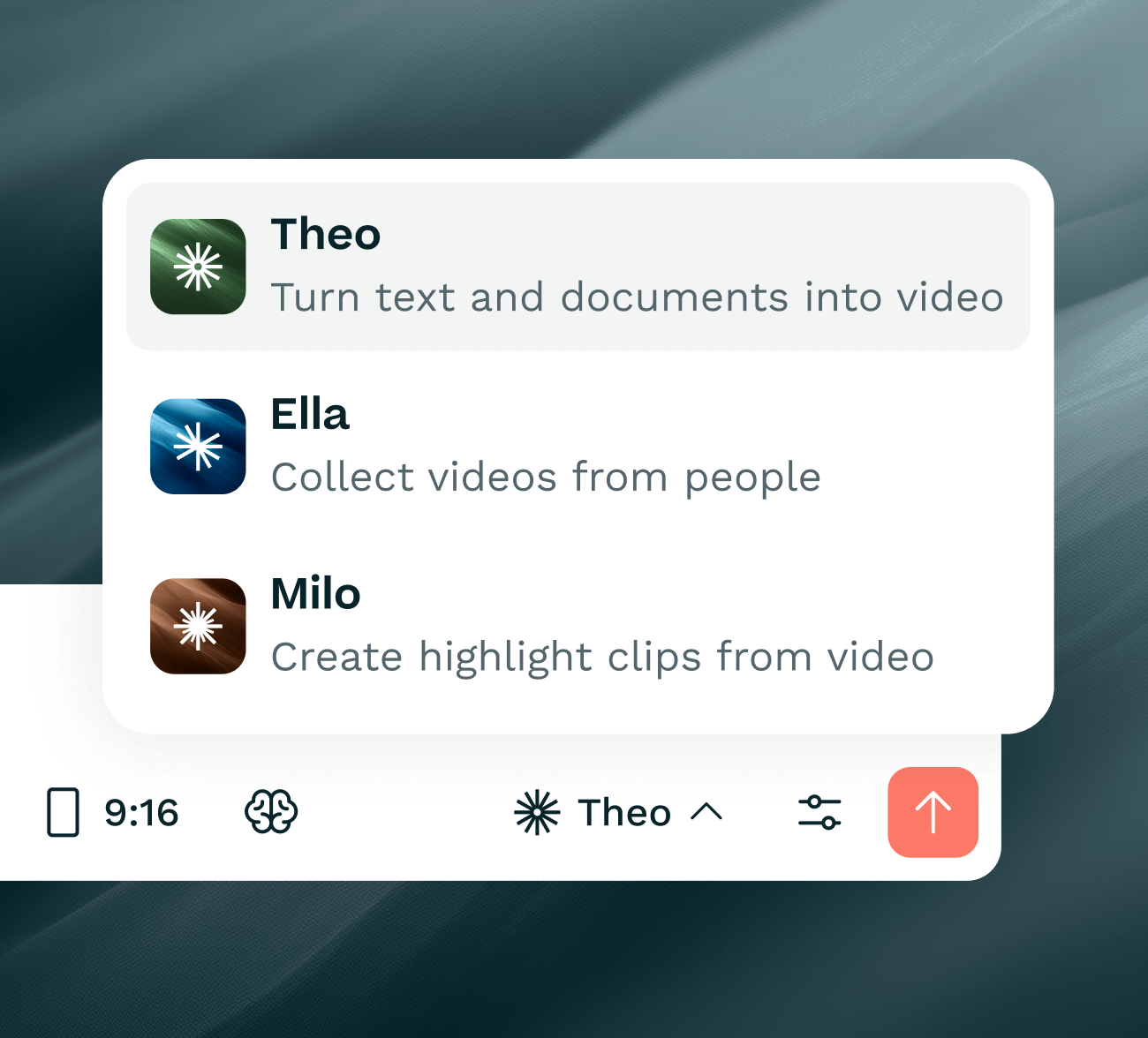
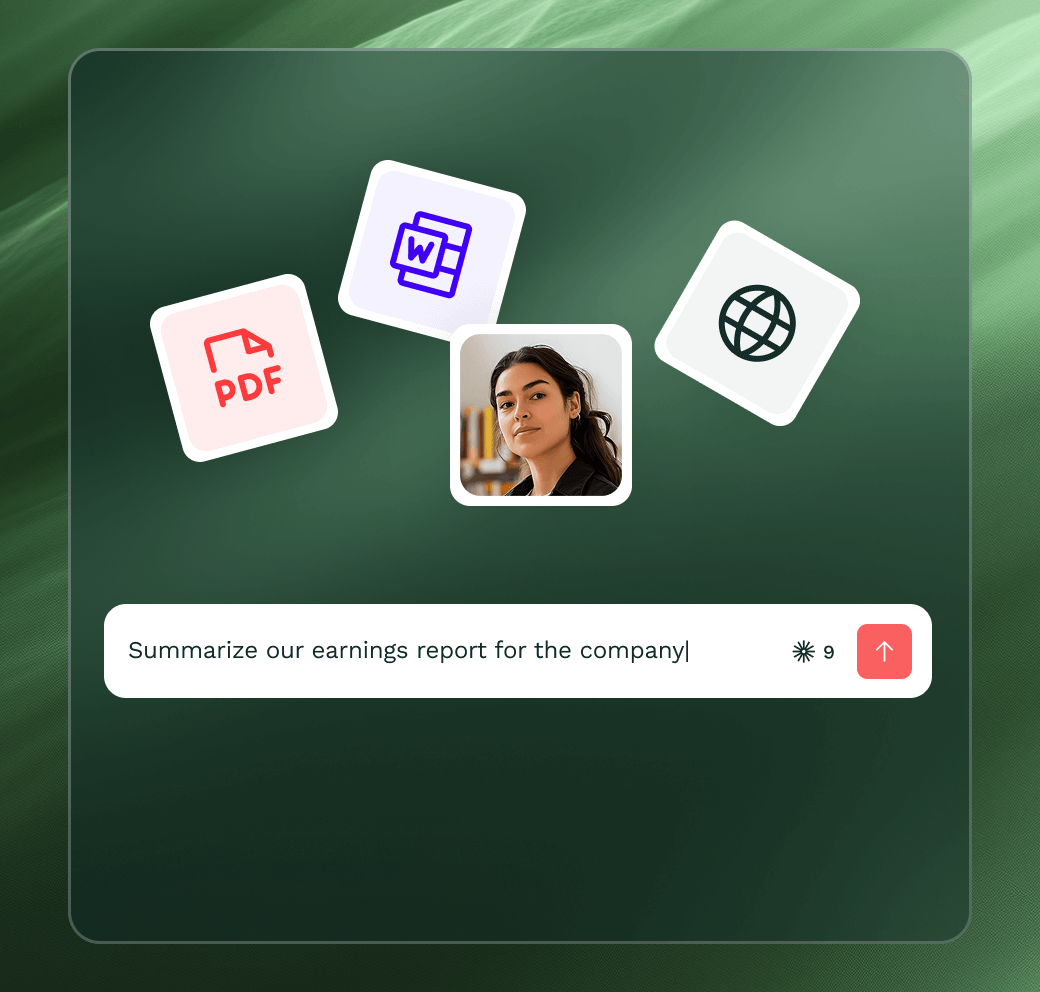
Theo, cofenster's AI Video Agent for text-to-video, handles the last step. You upload the policy or a short brief, Theo generates a script, visuals, music and AI voiceover, and you review the storyboard before exporting. Brand Templates apply your fonts, colours and logo, and Theo supports more than 30 languages with subtitles and voice. Because the voice is AI generated, label the video as AI generated, as we explain in our guide to EU AI Act video compliance.
How do you reach employees without a desk or a common language?
Publish the video in the channels frontline teams actually open: the employee app, team chats, QR codes on break room posters or screens in the canteen. Our article on frontline communication covers these channels in detail.
Then localise. A policy that only exists in German or English leaves out part of many European workforces. Produce the same explainer in the main languages of your sites, following the approach in our guide to multilingual internal communications.
Key takeaways
Policies fail on attention, not intent. With 117 emails a day, a PDF attachment rarely gets read.
Uncertainty drives noncompliance. 87% of employees have not known how to comply at some point, so clarity is a compliance measure.
Regulation expects understandable information. AI literacy, pay transparency, whistleblowing and safety briefings all ask employers to inform clearly.
Short, spoken and visual works best. Research on multimedia learning supports voice plus visuals and no decorative extras.
Keep the policy, add the video. The document stays the reference; the video makes sure people know what it says.
See a policy become a video
cofenster works with more than 300 corporate teams, including Commerzbank, Continental and Rewe. Bring one policy you need to roll out this quarter to a live demo, and we will show you what Theo makes of it, on-brand and in your languages.
Frequently asked questions
Does a policy video replace the written policy?
No. The written policy stays the binding reference document. The video summarises what employees need to know and do, and points them to the full text. This keeps legal wording intact while making sure the key points actually reach people, including those who never open the intranet.
Who should approve a policy explainer video?
The policy owner and your legal or compliance team should approve the script before the video is produced. Approving text is faster than reviewing a finished video, and it keeps changes cheap. Internal comms then owns format, channel and timing, and your works council may need to be involved for some topics.
How often should policy videos be updated?
Update the video whenever the policy changes and review it at least once a year. With text-to-video, an update means editing the script and regenerating the video, which takes minutes rather than a new production. Add the version date to the video description so employees know it is current.